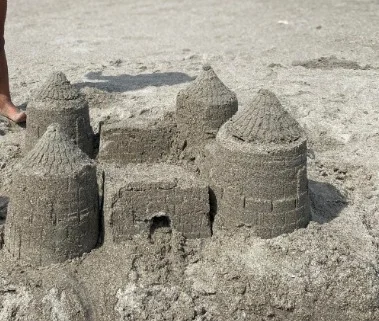
A practical guide for parents and their building crew.
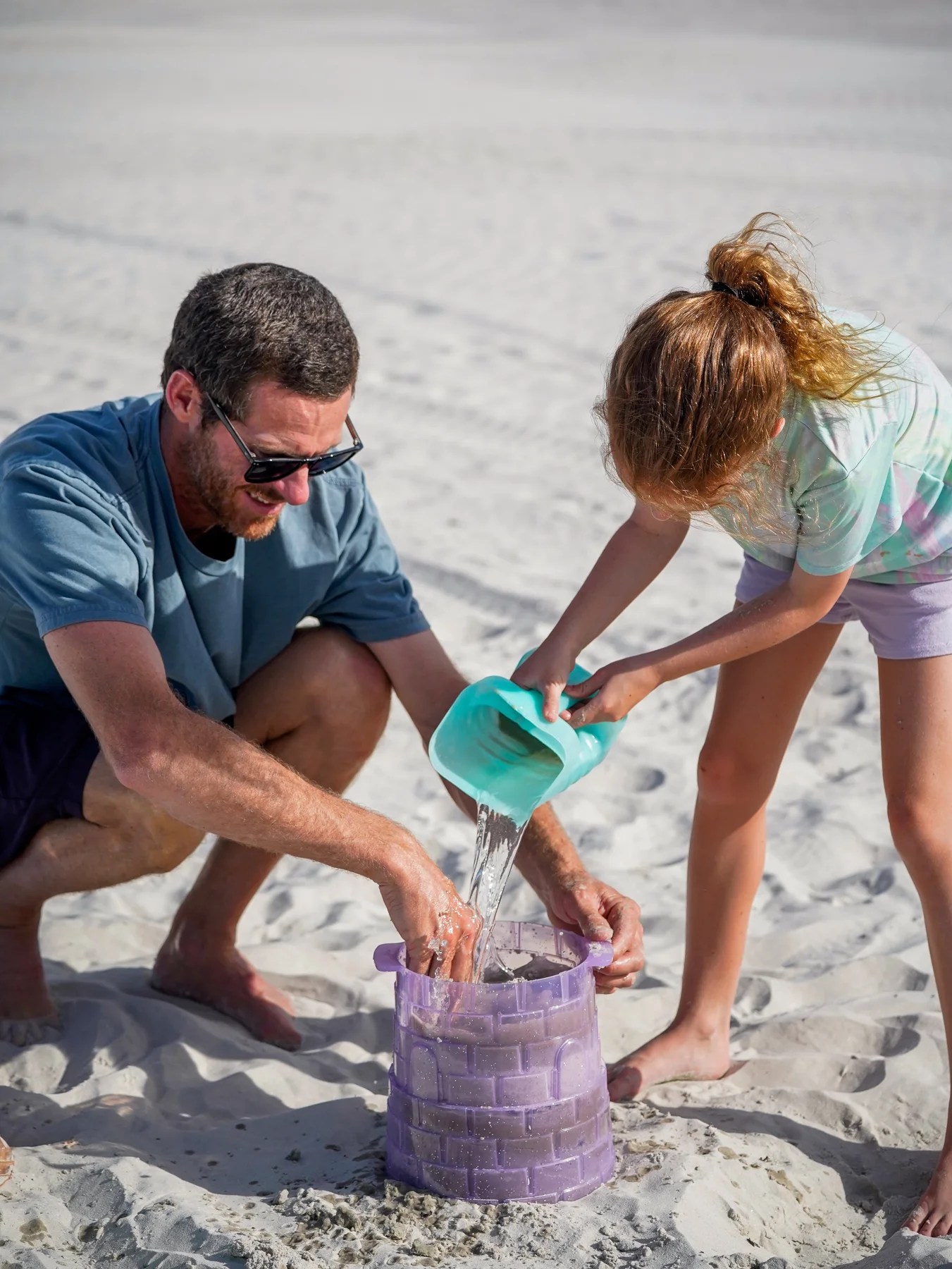
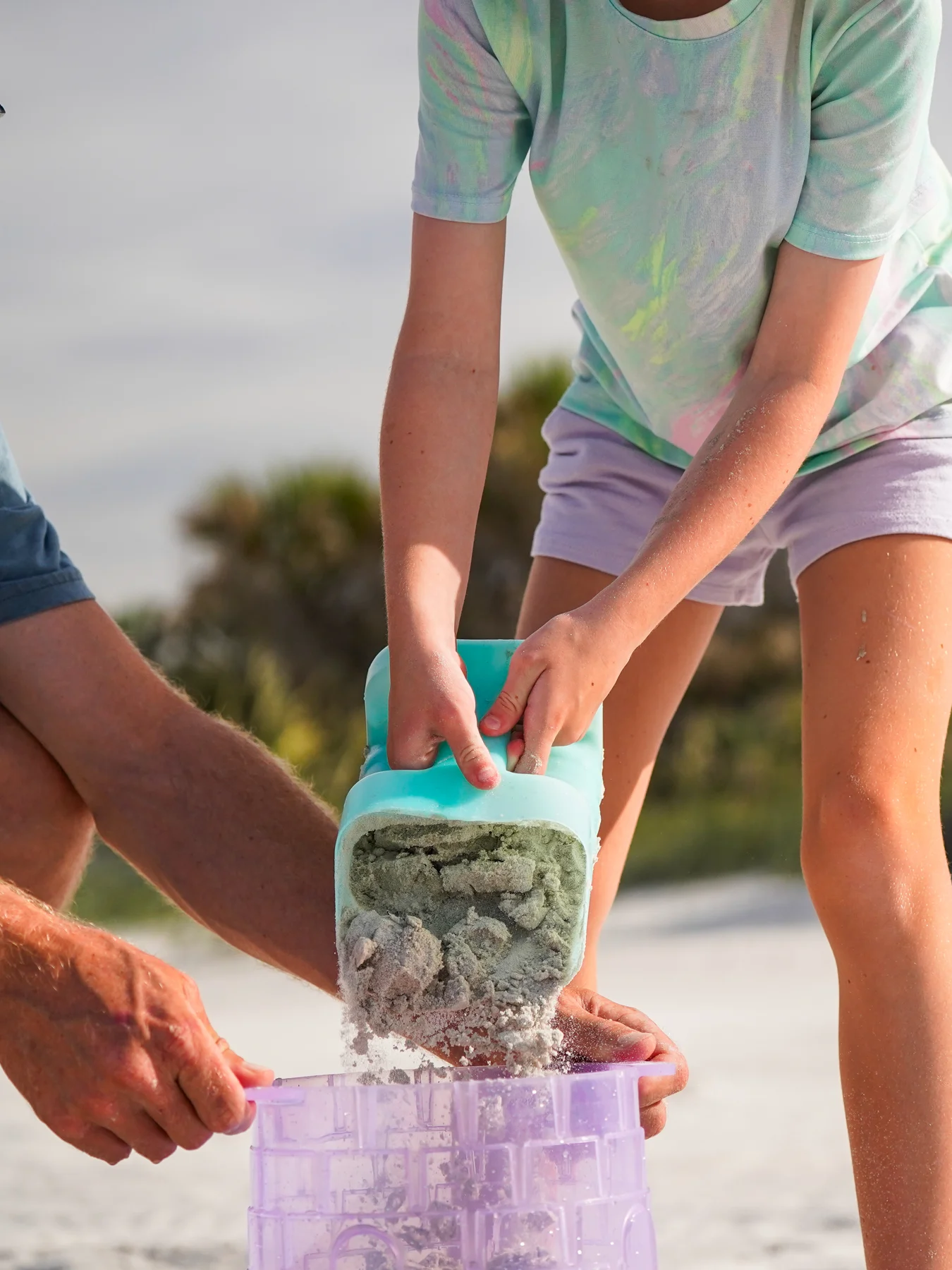
For the Sand Castle Science open molds: fill with dry sand, add water while tapping gently, then lift slowly and straight up. This is different from packing a closed bucket and flipping it over.
What does the failure look like?
| What you see | What to try next |
|---|---|
| The whole shape falls apart immediately | Check that water reached the sand throughout the mold. Watch through the clear sides as you gently tap. |
| Holes or missing patches on one side | Look for gaps around the edges. Add sand evenly and help it settle rather than leaving a hollow pocket. |
| A tower leans or splits near the base | Choose a level spot, away from a slope, running water, or the reach of waves. |
| One edge breaks as the mold comes off | Slow down. Lift vertically without twisting or pulling the mold sideways. |
| Details break during decorating | Use lighter touches and leave more sand between neighboring windows and doors. |
Water helps, but there is no universal beach recipe.
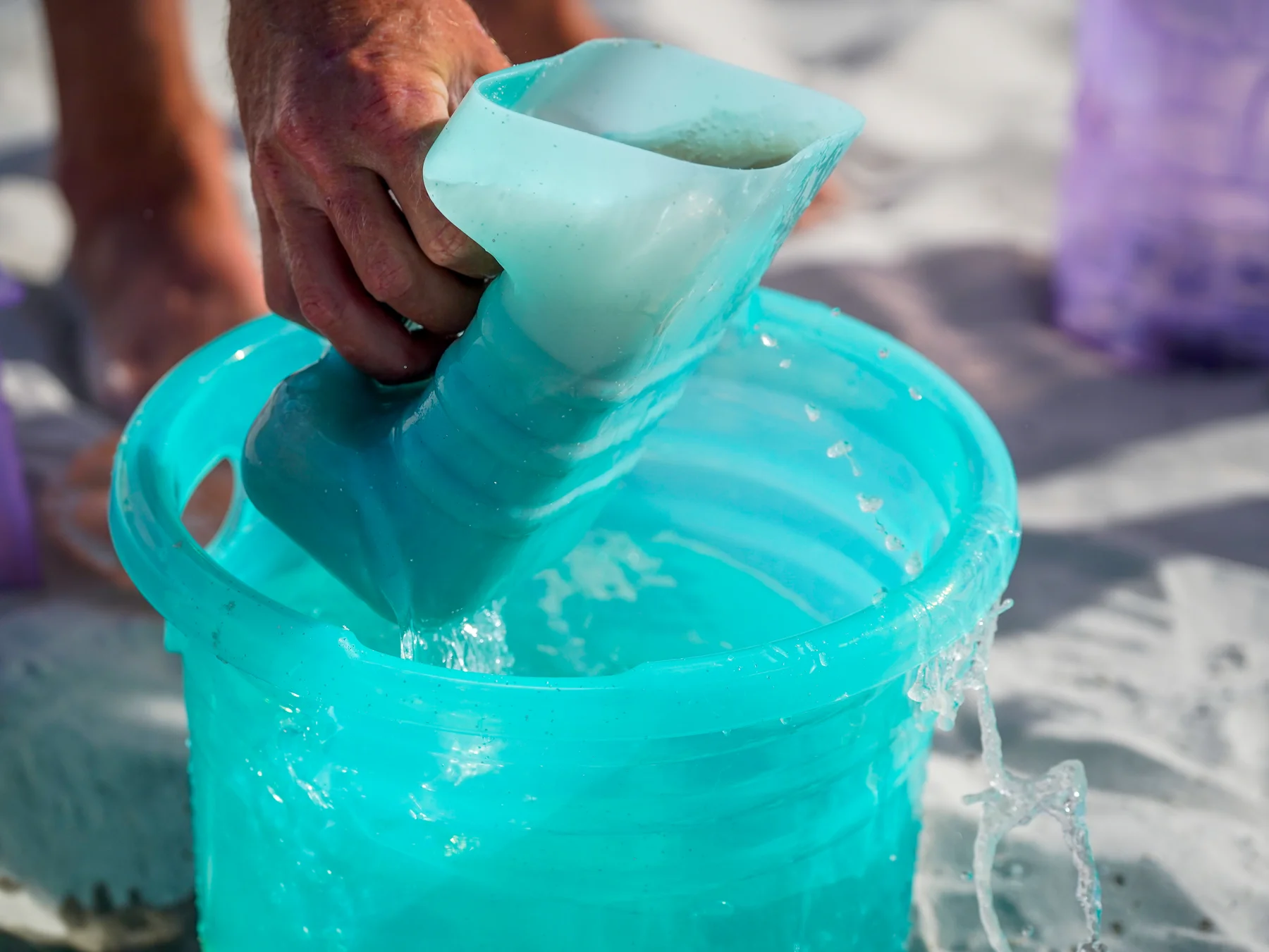
A little water can form bridges between sand grains, helping them hold together. That does not mean every beach needs the same amount. Grain size, the sand you start with, and drainage all affect what happens. Avoid treating a fixed water-to-sand ratio as a guarantee.
With our open molds, begin with dry sand and pour water from above. Tap gently while watching the sand settle. If you start with very wet sand in the scoop, it may be harder to empty cleanly. The illustrated building guide shows the intended sequence.
Use the clear sides as a window.
Instead of guessing what is happening inside, look for obvious gaps as you add sand and water. Gentle tapping can help the sand settle into corners. Keep the mold in place while you do this. Moving it across the beach mid-fill can disturb the base you are trying to make.
More force is not automatically better. If a child is doing the filling, a grownup can steady the mold and help with the water. Then swap jobs so everyone gets a turn.
Give the lift its own moment.
Clear loose sand away from the outside, hold the mold steadily, and lift slowly upward. Avoid a last-second twist. If someone is standing close by, ask them to pause while the mold comes off so feet do not disturb the base.
A three-build troubleshooting challenge
- Build one small tower. Use the normal fill, water, tap, and lift sequence. Notice where it fails.
- Change one thing. For example, spend a little longer settling the sand, or lift more slowly. Keep the other steps similar.
- Compare the result. Ask what changed, then repeat the version that worked better before adding walls.
If the sand still will not cooperate, try another patch of clean sand. Very different sand types can behave differently. We do not promise identical results with kinetic sand, snow, or other materials.
Science background: How to construct the perfect sandcastle, Scientific Reports (2012). The research explains wet-sand cohesion; it is not a test or endorsement of our kit.
Designed for family play. Marketed for ages 4–12; product labeled ages 3 and up. Small parts: not for children under 3. Adult supervision recommended.