A practical guide for parents and their building crew.
Use a small ordinary closed cup to compare premixed sand samples. This is a fair-test activity, not the filling method for our open molds. For the kit, use dry sand first, then add water in place.
Gather your materials.
- Clean, dry play sand or beach sand from one patch
- Three bowls or containers, one small closed cup, and a scoop
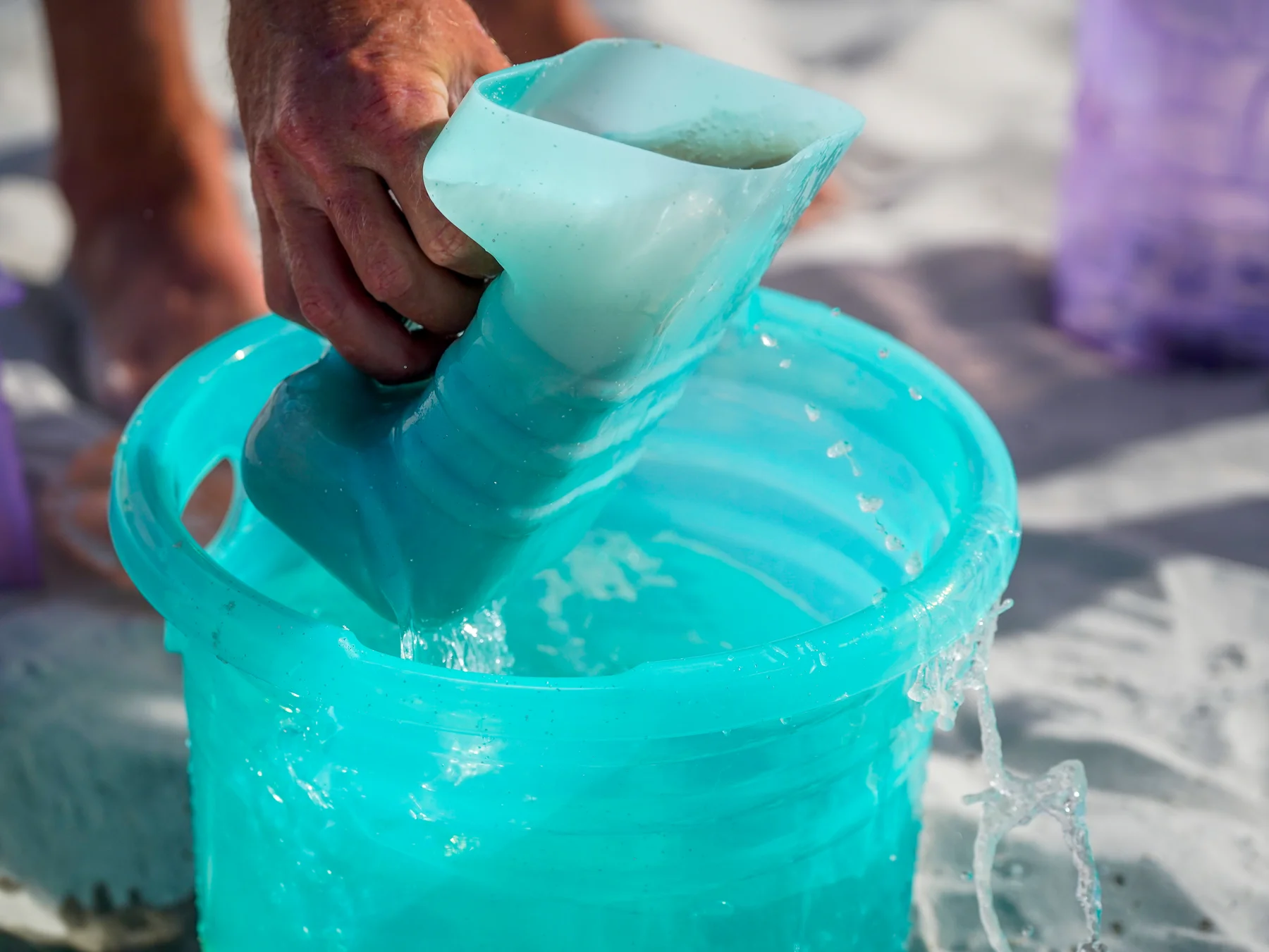
- Water and a tablespoon
- A level tray or patch of sand
- Paper, pencil, and a grownup to help
Use the same cup to measure the sand into each bowl. Avoid sand with sharp debris. Keep sand and water out of mouths and eyes, and wash hands afterward. Younger children need close adult supervision.
Ask a question before you start.
“Which sample will hold a shape after we lift the cup?” Ask everyone to make a prediction and explain it. A prediction is not a promise to get the answer right. It gives you something to compare with what actually happens.
Make a fair comparison.
- Measure equal sand samples. Put one level cup of the same dry sand into each bowl. Label the bowls A, B, and C.
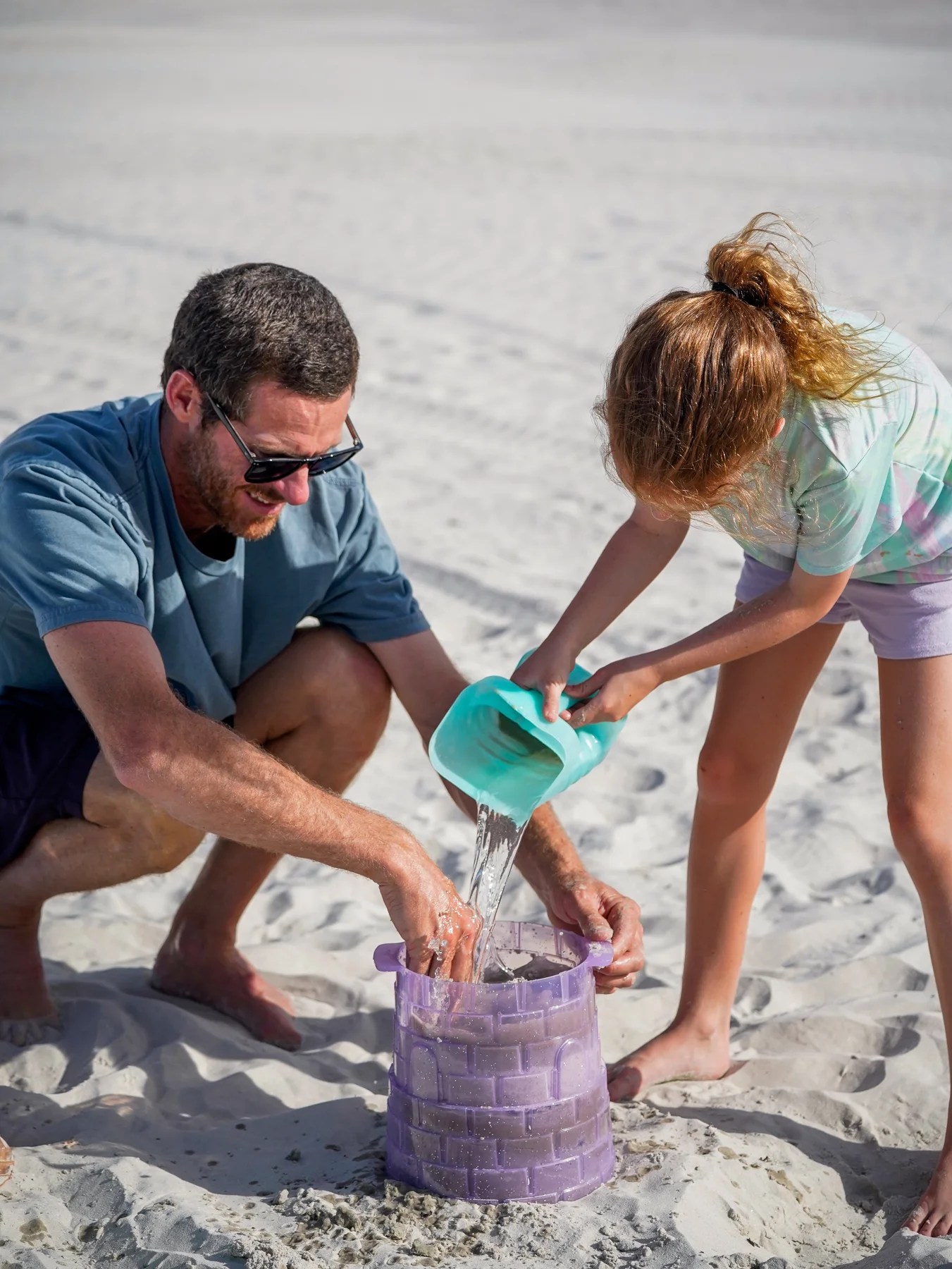
- Change only the water. Leave A dry. Mix one tablespoon of water into B and two into C. These are starting amounts for comparison, not a “perfect sandcastle” recipe.
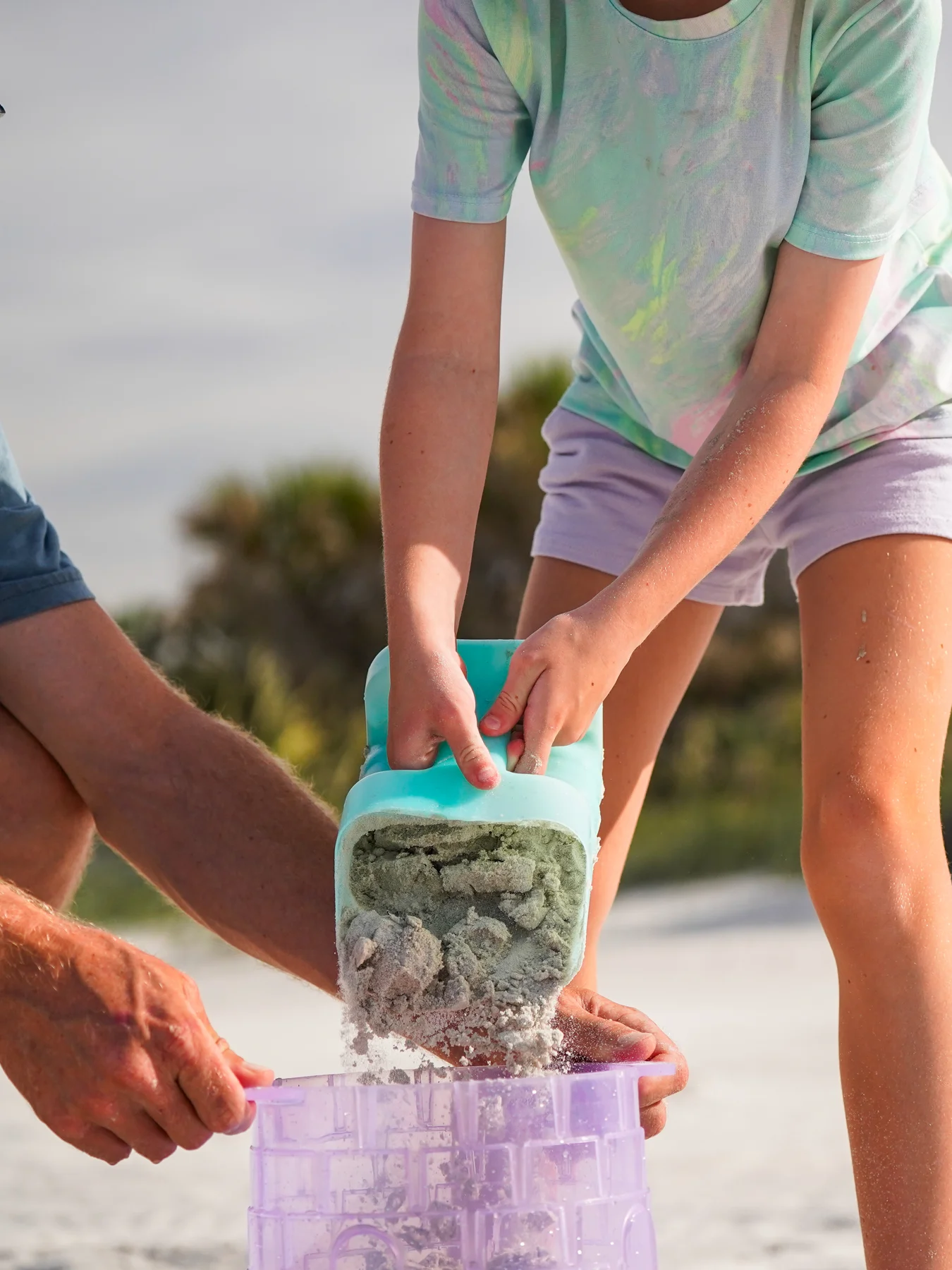
- Use the same mold each time. Fill the small closed cup with sample A, using the same number of gentle pats you plan to use for the other samples.
- Invert and lift. Turn the cup onto the level tray or sand and lift carefully. Repeat with B and C, using the same technique. Rinse and dry the cup between samples so leftover water does not change the next test.
- Observe. Look at the outline, edges, and whether the shape stands. Draw each result before deciding which worked best.
Record what happened.
You can print this page or copy this table onto paper. Record your observations rather than writing in an expected winner.
| Sample | Water added | What happened when we lifted? | What would we change? |
|---|---|---|---|
| A | None | ________________ | ________________ |
| B | 1 tablespoon | ________________ | ________________ |
| C | 2 tablespoons | ________________ | ________________ |
A little science behind the shapes.
Small amounts of water can form liquid bridges between sand grains. These bridges help damp sand hold together. Researchers describe this as capillary cohesion. The sand you use and the amount of water matter, so the same spoonfuls will not produce identical results everywhere.
Science background: How to construct the perfect sandcastle, Scientific Reports (2012). This family activity adapts the general idea of comparing sand and water; it does not reproduce the researchers’ measurements or test our product.
Choose your next question.
- What if we try a water amount between B and C?
- What changes if we pat each sample fewer times?
- What happens if we lift more slowly?
- Would the same water amount work with sand from another beach?
Pick just one new question for the next round. Keep everything else similar and compare your notes. When the experiment is finished, put that curiosity into a simple family castle design.
Designed for family play. Marketed for ages 4–12; product labeled ages 3 and up. Small parts: not for children under 3. Adult supervision recommended.